



The statue of Afaya on Ejina Island
Apha í a (Greek: Ἀπαία, Apha í a) is a Greek goddess worshipped only at a sacred site on the island of Aegina in the Saronic Gulf. She was worshipped as a local god related to fertility and agricultural cycles as early as the 14th century BC. Under the later Athenian hegemony, she was recognized as the goddesses Athena and Artemis, as well as Nymphon Britomatis. In the 2nd century AD, during the time of Pausanias, people would pass by the holy site of Afaea when traveling to the mountain of Zeus, the god of all Greece.
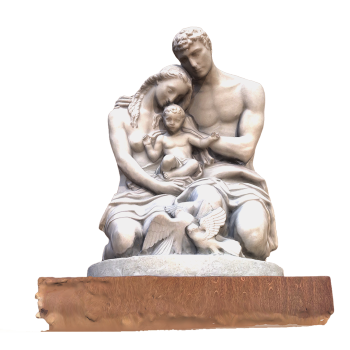
Family "
Created by Leopoldo de Almeida's "Family" in 1947. The statue is located in the Jos é Maljoa Museum. Leopoldo Neves de Almeida (October 18, 1898- April 28, 1975) was a sculptor and Portuguese teacher. He belongs to the second generation of Portuguese modernist artists.

Red sandstone statue of Shiva
The mentioned artwork is called 'Shiva God Made of Red Sandstone', created in the late 10th century AD, and is now collected at the Minneapolis Museum of Art in the United States. Shiva is the god of destruction and regeneration in Hinduism. The god Shiva on this statue is depicted in an elegant posture, with jewelry decorations hanging from the belt, pendants hanging from the ears, and a carefully crafted dome hairstyle on the hair. Shiva is depicted as a celestial couple worshipped. The dynamic triple bending posture of Shiva, known as tribhanga, is closely related to the prescribed movements of the body, limbs, and gestures in classical Indian dance.

Raft Tuomo statue
The statue of Vajrayana was created in 1108 AD and is now housed in the Minneapolis Museum of Art in the United States. The statue of Raft Tuomo is a spiritual victor who was liberated from the world by adhering to strict nonviolent principles and giving up material wealth. Even physical or mental behavior is considered a form of material attachment. Only 24 Buddhas (the last one being the statue of the founder of Jainism in 500 BC) have reached an indestructible, immortal, and omniscient inner soul. This ideal is manifested in the perfect stillness of the characters.

The Three Graces of Dance, Meihui
The Three Graces of Dance "is a 19th-century French artwork currently housed in the Minneapolis Museum of Art in the United States. This artwork is a sculpture shaped like three goddesses named 'Three Graces'. In Greek mythology, Charites, also known as Graces, are three or more goddesses who represent charm, beauty, nature, human creativity, kindness, and fertility. They are usually considered daughters of Zeus and the ocean goddess Eurynome. In Roman mythology, they are called Gratiae, which means' grace '

Ming Dynasty Tibetan Green Tara Statue
The Tibetan style Green Tara statue from the Ming Dynasty is a 15th century Ming Dynasty artwork, currently collected at the Minneapolis Museum of Art in the United States. Green Tara is the incarnation of Avalokitesvara Bodhisattva. Tara, also known as Tara in Sanskrit, is the full name of Saint Salvation Tara Buddha Mother. In ancient China, she was referred to as Tara Bodhisattva or Tara Guanyin. Tara has many different manifestations, including 21 Tara, 500 Tara, and others, all of which are incarnations of Avalokitesvara Bodhisattva. Green Tara is the main deity of all Tara, capturing all the merits of the other 20 incarnations.

Tibetan auspicious beast Mani Wheel
The "Mani Wheel" is a scripture turner in Xizang, a cylindrical device for Buddhist practice, used to spread spiritual blessings and evoke good karma. The prayer wheel is composed of cylindrical wheels mounted on a shaft made of metal, wood, stone, leather, or coarse cotton. Sutra turning tubes are common in Xizang and Xizang culture dominated areas.

Longevity Star Woodcarving
Taoist longevity star wood carving. In Chinese, his name means' Star of Longevity '. The elderly figure leaned against a cane, holding a peach in his left hand and a crane beside him. In this situation, the crane would land on the cane.

Qing Dynasty gilded bronze statue of Guan Yu riding on horseback
Guan Yu (160-219 AD), also known as Yunchang, was an important general and historical figure of Shu Han during the Three Kingdoms period in China. He is a trusted aide and deputy general of Liu Bei, as well as a legendary figure in Liu Bei's clothing token "Scratching Bones for Healing". Standing at seven feet and five inches in length, with a beautiful and majestic beard, and high martial arts skills. He made significant military achievements for Liu Bei in the Battle of Red Cliffs and was awarded the title of "Marquis of Wu", becoming an important assistant and protector of Liu Bei. He is known for his loyalty and bravery, and is revered as the "Martial Saint" by people. Known as' Guan Gong 'by later generations and widely worshipped. The spirit and story of Guan Yu are widely praised in Chinese culture and have become legendary figures in history.

Qing Dynasty gilded offerings to Buddha
This is a Buddha statue from 1850 AD, currently housed in the Minneapolis Museum of Art in the United States. This Buddha statue sits in the tentacle print on the ground, depicting the scene of Buddha about to awaken under the Bodhi tree. This moment is often described as a powerful battle between good and evil, confusion and insight.

Gilded Bodhisattva Statues of Qing Dynasty
The artifact is one of a pair of gilded bodhisattva statues from 18th century AD China. It is now housed in the Minneapolis Museum of Art. Although the two statues are mirror images of each other, they do not represent the same bodhisattva; they are Maitreya and Guanyin, respectively. They stand in elegant poses, holding the stems of a lotus flower, probably part of a sculptural trinity that surrounds a larger Buddha.

King Kong Lex Hum
The door gods are known in Japan as the Kongers, and their role is to protect the temple and Buddhism. Door gods (Niō) usually appear in pairs, with one mouth open and one mouth closed. Those who open their mouths are called A, and those who close their mouths are called Hum. Corresponds to the second generals of Chinese Buddhism. These two names stand for the first and last syllables in Sanskrit, symbolizing the beginning and end of all things. The pair of statues are now in the collection of the Cleveland Museum of Art.

King Kong, Hercules
The door gods are known in Japan as the Kongers, and their role is to protect the temple and Buddhism. Door gods (Niō) usually appear in pairs, with one mouth open and one mouth closed. Those who open their mouths are called A, and those who close their mouths are called Hum. Corresponds to the second generals of Chinese Buddhism. These two names stand for the first and last syllables in Sanskrit, symbolizing the beginning and end of all things. The pair of statues are now in the collection of the Cleveland Museum of Art.
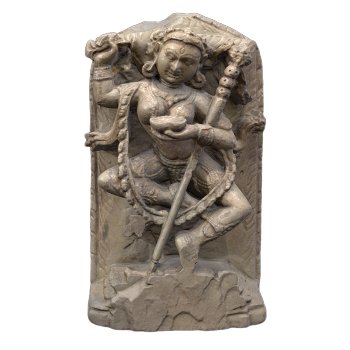
Dancing King Kong Hai Mother
This is a small stone tablet called "Dancing King Kong Hai Mother", created in Nepal from 1000 to 1100 AD. The overall size of the statue is 9.6 x 5.3cm. The statue is now in the collection of the Cleveland Museum of Art. King Kong Hai Mother, also known as King Kong Yoga Mother, is one of the Buddhist King Kong (Tantra) statues and belongs to the system of empty mothers. The Ming concubine of Shengle King Kong and Great Compassion Red Guanyin originated in India from the 8th to the 12th centuries. The mother-to-mother revered by the four major sects is mainly used to make the spirit of the treasure bottle and the concept of self-determination.

Juniper Foal Dog Right
The pair of foals are artifacts from the Kamakura period (1185-1333) in Japan. They are made of Japanese cypress wood with lacquer, gold leaf and color. The height of this foal is 45.7cm. Colts are usually placed at the entrance to the shrine to ward off evil. The colt on the right has an open mouth, while the colt on the left has a closed mouth. These characteristics are related to the opening and closing of the two door gods who protect Buddhist temples. Collected at the Cleveland Museum of Art.

Juniper Foal Dog Left
The pair of foals are artifacts from the Kamakura period (1185-1333) in Japan. They are made of Japanese cypress wood with lacquer, gold leaf and color. The height of this foal is 42.5cm. Colts are usually placed at the entrance to the shrine to ward off evil. The colt on the right has an open mouth, while the colt on the left has a closed mouth. These characteristics are related to the opening and closing of the two door gods who protect Buddhist temples. Collected at the Cleveland Museum of Art.

Statue of Warrior in Helmet
The statue of a warrior wearing a helmet is a semi-naked statue of an ancient Greek warrior with a tunic and a large feathered helmet decorated with a carved motif. There is a hole in the right hand: the original statue should hold up a spear (there is a hole). The period in which the artifact was made was Europe (period)-Iron Age-Europe (period)-Ancient Greece, with dimensions of 20.5cm in height and 5.5cm in width. The collection site is the National Archaeological Museum of France.
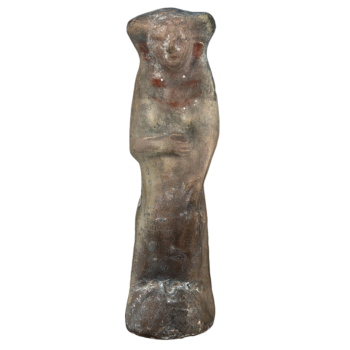
Madonna Statue
The statue of the Virgin Mary is a female statue from the Ceccaldi collection. The statue can be traced back to the Iron Age in the 6th century BC. This statue was discovered in Cyprus and is now housed in the National Museum of Archaeology in France. The size of this statue is 18.3 centimeters high and 5.3 centimeters in diameter.

Gallic knight Roman
The Gallic Knight Roman "is an artwork created by Emmanuel Fremit (1824-1910). This is a sculpture depicting a Gallic knight It was created in the 1860s for the National Archaeological Museum of Saint Germain in France. It is a bronze sculpture cast by Barbedienne Foundry in the early 20th century. Its dimensions are 36.5 centimeters high, 9.5 centimeters long, and 9.6 centimeters wide. This sculpture is now housed in the Mus é e d'Orsay in France. Emmanuel Fr é met is a French sculptor known for his animal sculptures.

Gallic knights
The 'Gallic Knight' is an artwork created by Emmanuel Fremit (1824-1910). This is a sculpture depicting a Gallic knight It was created in the 1860s for the National Archaeological Museum of Saint Germain in France. It is a bronze sculpture cast by Barbedienne Foundry in the early 20th century. Its dimensions are 36.5 centimeters high, 9.5 centimeters long, and 9.6 centimeters wide. This sculpture is now housed in the Mus é e d'Orsay in France. Emmanuel Fr é met is a French sculptor known for his animal sculptures.

Egyptian female statue
It usually refers to the female images of ancient Egypt, who held important positions in art, society, and religious life. In ancient Egyptian art, female images were often depicted as graceful and dignified postures, reflecting the respect and noble status of women in ancient Egyptian society. These images can be sculptures, murals, or paintings on pottery, depicting the daily lives, clothing, jewelry, and roles of ancient Egyptian women in their families and society. It also plays an important role in religious ceremonies, sometimes depicted as worshippers of gods or individuals directly associated with gods.

Statue of Buddha teacher Ajuthia
It is a replica of a 19th-century Cambodian style bronze Buddha statue. This statue depicts the posture of Buddha in teaching, with a dignified sitting posture and hands placed flat, showing a sense of tranquility and wisdom. Ajutya was the ruler of the Peacock Dynasty in ancient India, who had a significant influence on the spread of Buddhism, especially during his reign when Buddhism was greatly promoted. The original of this statue is collected at the Jimei National Museum of Asian Art in Paris. The replica was made by the National Museum Art Studio using the same bronze material as the original, aiming to provide museums and art enthusiasts with opportunities for collection and research.

Mira's dancer's terracotta statue
It is a red clay statue from ancient Greece, currently housed in the Louvre Museum in Paris. Created by Athenian potters around 350 BC. It depicts a dancer dressed in a transparent robe, whose theme shares similarities with statues created by other studios in the Hellenistic world at that time (330-31 BC). Early sculptures of this kind were sometimes believed to depict Nymphs (related to the god Pan), but they were also considered mortal, meaning future brides who participated in the sacred wedding dance.

Sleeping Tagra Girl Sculpture
It is a replica of an ancient Greek style terracotta statue, originally created by an ancient Greek artist between the late 5th century BC and the 3rd century BC, and now housed in the Louvre Museum in Paris, France. These statues are known for their naturalistic features, preserved pigments, diversity, and charm, and are commonly referred to as Tanagra statues, named after the large number of such statues discovered in the ancient city of Tagra in the state of Viotia in central Greece. Most of them depict fashionable women or girls elegantly wrapped in sheer cloaks, sometimes wearing wide brimmed hats, holding flower garlands or fans.

Popular Models

Honey Badger (3D animated model)
203 View
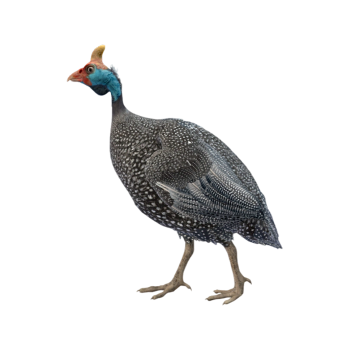
Guinea fowl (3D animated model)
172 View
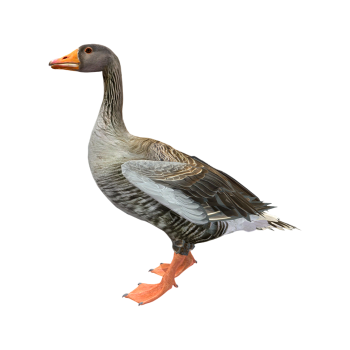
Wild Goose (3D animated model)
194 View

Red Fox (3D animated model)
166 View
Random Model

MacBook Pro (14 inch, 2021) Apple Laptop
1155 View


Hokkaido Pumpkin 3D Model
840 View


Shiba Inu 3D Animation Model
1008 View

Mercedes Benz G63 AMG (red)
1382 View
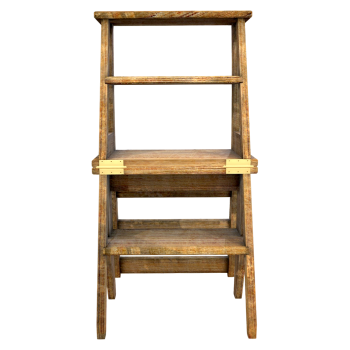
Simple White Birch Ladder
559 View


Raccoon skull
1910 View

Sweet pepper 3D model
899 View